Belly Dance
Instructor: Professional Belly Dancer Jillanna Babb
For more information about Merrybellies Belly Dance classes, troupes, and performances, please visit Merrybellies Belly Dance.
Important Notes
- Bring water!
- It is important for beginners to wear form fitting clothes so that the movements of the body can be seen to better learn.
- Wear comfortable, stretchy clothing such as yoga pants, fitted t-shirts, choli tops or other cropped tops.
- A hip scarf or hip belt helps beginners to see the movement of the hips.
- Practice barefooted, in socks (toe socks are great!) or wear dance/ballet/lyrical footwear.
- If you must arrive late, please warm-up/stretch before jumping in.
Belly Dance Benefits:
- Improve coordination, balance, muscle tone, and posture.
- Reduce stress
- Tone and sculpt the arms, legs, and especially core muscles
- Learn graceful movement
- Get really strong quadriceps
- Strengthen and increase flexibility of the spine.
- Learn new music and culture
- Make friends
- Join a performance troupe
- Gain self-confidence
- Enjoy self-expression
- Gain personal achievement
- Have fun while doing any or all of the above!
Choreography & Improvisation
The work must begin with passion and movement responding to the music. At times the purity of an improvisational response must be preserved by not choreographing. If the decision to choreograph arrives, we sift through the music note by note, accounting for every rhythmic shift and accent. We calculate and practice until we arrive at the point of freedom and passion again, back to the beginning but now as a preserved moment to relive: a perfected, polished jewel. Still there is no better feeling than pure improvisation, though the dance disappears into the night so deeply experienced it may never be recalled except with the heart.
Just some thoughts on choreography & improvisation, my twin dance partners. We also dance what I term, "improviography," which is just as it sounds: a chimera that may consist of any percentage of each in various deliveries.
I teach technique for building improvisation skills as well as concepts of choreography in most of my classes. Other classes focus only on choreography instruction and the technique within the choreography. I'm also available for commissions. I can create an original choreography for a commission, teach a choreography from my extensive repertoire, or offer critique and collaboration on a choreography created by the dancer.
Jillanna Babb, Studio Owner, Director, & Choreographer
PRENATAL BELLY DANCE
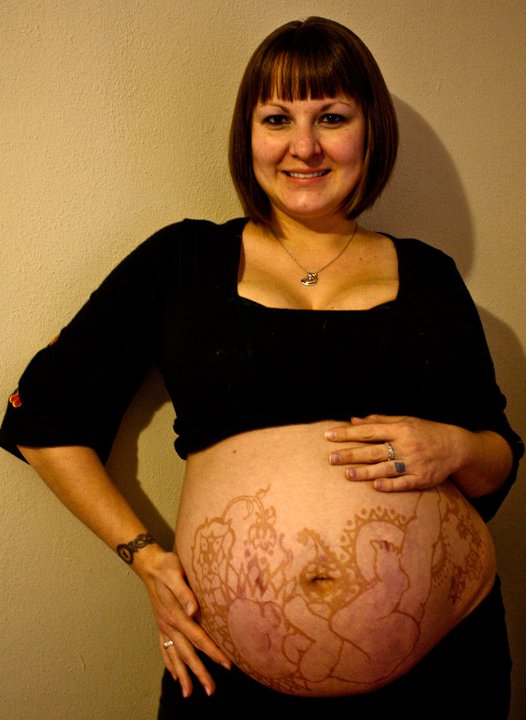
While studying midwifery at WomanCraft in Amherst, MA, Jillanna was inspired to develop a belly dance class format focused on helping women to enjoy a healthy pregnancy, birth and postpartum. She intuited that belly dance movements could help especially during labor, and began to combine her study of midwifery with her passion for belly dancing to create Merrybellies Belly Arts, with her first classes focused on prenatal and postpartum belly dance. Some movements of belly dancing just "happen" during natural labor when the mother is not confined to the bed. Other movements are less known, but can be helpful in the relief of discomfort, the achievement of optimal fetal positioning, and also in the provision of the basic healthy benefits of exercise. Postpartum belly dance aids in recovery and return of muscle tone, and also can be soothing to babies held in arms or sling while mother dances.
Jillanna teaches prenatal belly dance classes, workshops, and private lessons. She also loves to demonstrate helpful movements at baby showers! Another option for pregnant and postpartum mothers is to join a beginner belly dance class; Jillanna's classes are small and personalized, and she will make sure you learn the right moves and avoid those that are unsafe for pregnancy and postpartum. Jillanna has twelve years experience in the development of her format, movement vocabulary and teaching experience, plus an advanced degree in midwifery; doula training through WomanCraft Midwifery and ALACE; advanced doula training in Optimal Fetal Positioning through DONA; and more than seven years doula and midwifery apprenticeship experience.
For more information or to inquire about the next round of prenatal belly dance classes, please call, text or email.

"This is my safe place. Dancing here makes me feel strong, beautiful, and confident. The ladies I meet in my classes quickly become friends. Best place I can think to dance. Thank you!!!!"
—Mara Ree